

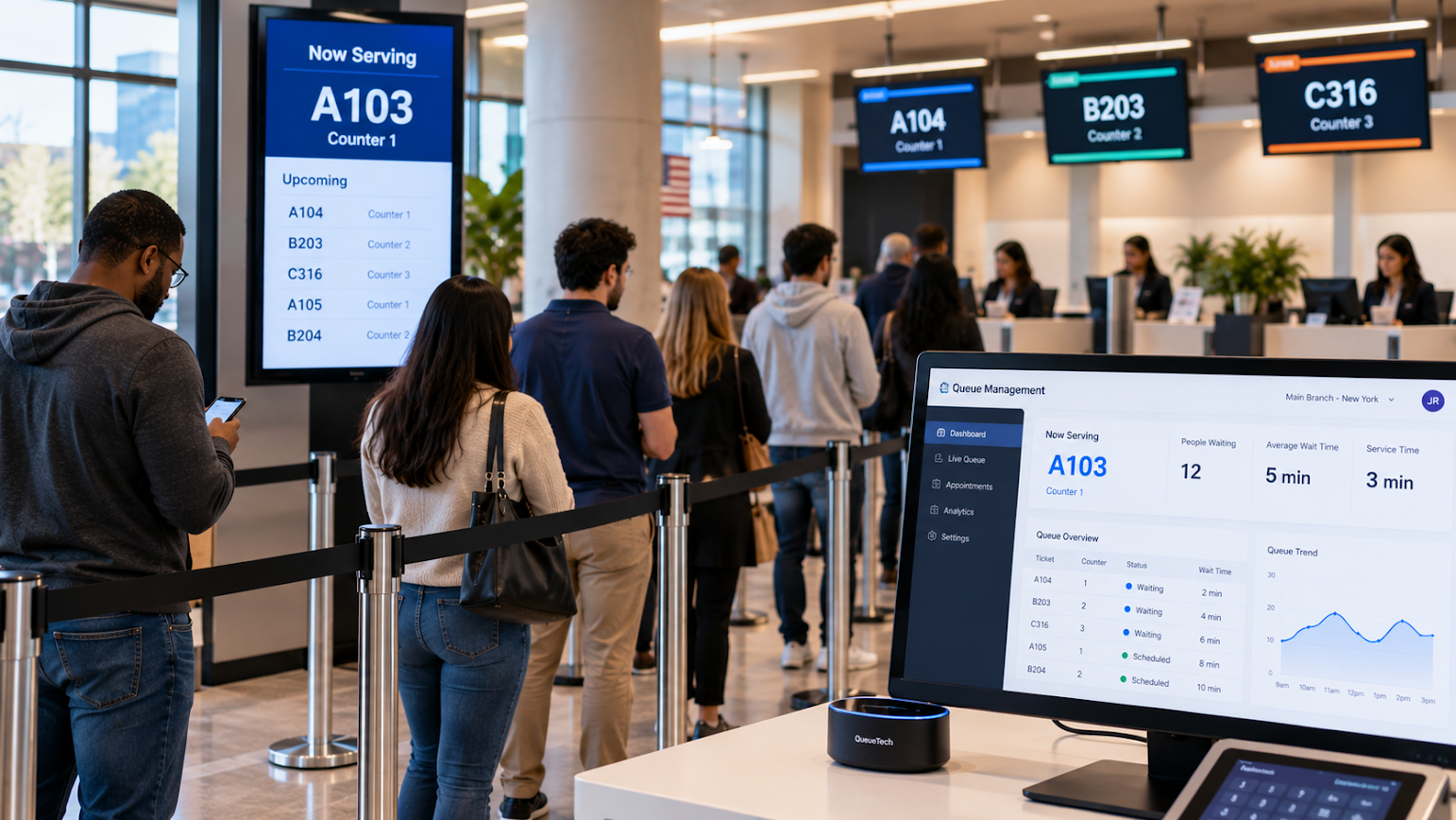
Waiting in line is part of everyday life in America, at the bank, the pharmacy, the DMV, the coffee shop and the airport. For years, businesses treated the line as something to put up with. Today, that’s changing fast. A new generation of digital tools is turning the humble customer line into an organized, measurable and even enjoyable part of the customer experience.
What Is Queue Management Software?
Queue management software is a digital system that organizes how customers wait for service. Instead of relying on staff to direct people or on customers guessing how long they’ll wait, the software tracks the line in real time. It can show wait times, notify customers when it’s their turn and send customers to the next available service point.
Modern systems often work alongside physical barriers and stanchions, combining the familiar structure of a line with live data and digital engagement.
Why US Businesses Are Making the Switch
Customer expectations in the US have never been higher. People are used to tracking deliveries, rides and orders on their phones, so they expect the same transparency when they wait in person. Long, unexplained lines lead to walkouts, negative online reviews and lost revenue.
Businesses are also under pressure to do more with fewer staff. When employees spend their time managing crowds and answering “How much longer?”, they have less time for actual service. Digital queuing addresses both problems at once.
How Digital Queuing Works
Most systems follow a simple flow. A customer joins the line, either physically between barriers or by scanning a code at the entrance. The system tracks how quickly the line moves and updates the expected wait time. When a counter becomes free, a visual or audio prompt calls the next customer forward. Behind the scenes, every step is recorded, so managers can review how the day went and spot patterns over time.
Key Benefits for Businesses and Customers
Shorter perceived wait times. When customers can see their place in line and an estimated wait, they become far more patient, even if the actual wait doesn’t change.
Better use of staff. Automated call-forward prompts send customers to the next free counter, so staff can focus on serving customers instead of directing them.
Real-time data. Managers can see peak hours, average service times and bottlenecks as they happen, then adjust staffing to match demand.
More engagement while waiting. Some systems let customers tap an NFC point or scan a QR code on the barrier to see promotions, menus, loyalty offers or useful information on their phones.
How Queue Tech Is Leading the Way
Queue Tech builds physical crowd control barriers and digital technology as one connected system. Its queue management system software connects to the barriers a business already has, so there’s no need to replace existing equipment.
Businesses can start simply, by adding interactive content customers access from their phones, and later scale up to smart devices mounted on the barriers that track wait times and call customers forward. Everything feeds into a single dashboard, giving managers a clear view of what’s happening across one location or many.
Industries Seeing the Biggest Impact
Digital queuing is making a difference across many sectors in the US:
- Retail: smoother checkouts and more time for customers to browse while they wait
- Healthcare: calmer waiting rooms at clinics, pharmacies and hospitals
- Banking: faster service at busy branches
- Government offices: more orderly lines at DMVs and public service centers
- Events and entertainment: quicker entry at stadiums, concerts and attractions
What to Look For When Choosing a System
Not every solution suits every business. Before investing, it’s worth considering these key points:
- Ease of setup: can it work with your existing barriers and layout, or does it need a full refit?
- Scalability: will it grow with you from one location to several?
- Customer-friendly features: are wait times, notifications and content easy for customers to use?
- Useful reporting: does the dashboard give clear insights your team can act on?
- Flexible pricing: monthly plans can make it easier for smaller businesses to get started.
The Future of the Customer Line
The line isn’t going away, but the experience of waiting in it is improving quickly. As customers come to expect the same convenience in person that they get online, digital queuing is shifting from a nice extra to a standard part of running a customer-facing business. Early adopters are already seeing the difference in their reviews, their repeat visits and their day-to-day operations. Businesses that adopt digital queuing gain happier customers, more efficient teams and data they can use to keep getting better. With solutions like Queue Tech’s, any business can turn the line from a source of frustration into part of a better customer experience.


